
AI Can't Replace Everything — Here's Why Some Tech Jobs Will Always Need Humans
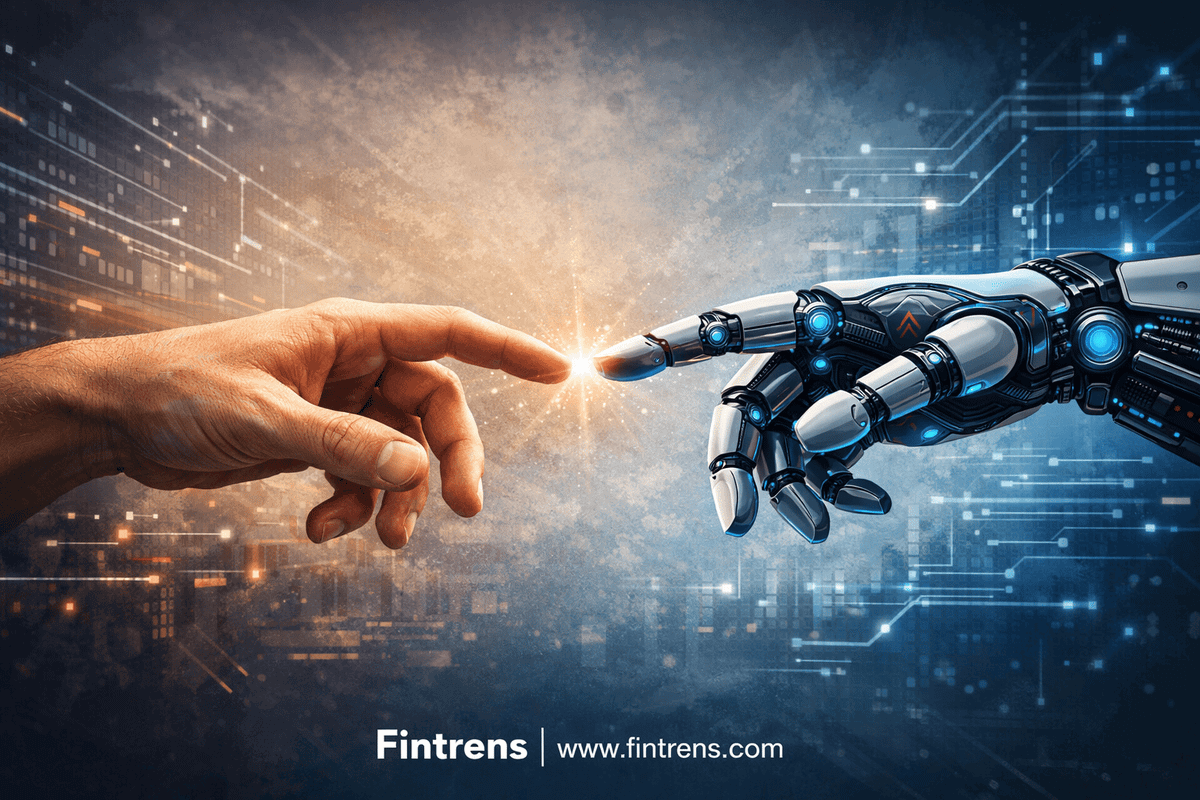
When IT stocks crash, the real value of human judgment becomes impossible to ignore
Nifty is down. Sensex is bleeding. Infosys, TCS, Wipro — all flashing red. And everywhere you look, people are asking the same scary question: "Is AI finally killing IT jobs?" Let's cut through the noise.
What's Actually Happening in the Markets Right Now
In early 2026, India's stock markets took a sharp hit. The Nifty and Sensex wiped out recent gains almost overnight. India's biggest IT names — Infosys, TCS, HCLTech, Wipro — all saw significant drops.
The reasons? A mix of things:
- The US Fed delayed its interest rate decisions, creating global uncertainty
- India's Budget 2026 hiked the Securities Transaction Tax (STT), spooking traders
- And the biggest fear looming over everything — AI disruption
That last one is what's really driving the panic in the IT sector. People are genuinely afraid that AI is coming for tech jobs. And honestly? That fear isn't completely wrong. But it's not completely right either.
What AI Is Good At — and Where It Completely Falls Apart
AI is genuinely impressive. Give it routine tasks, data crunching, pattern recognition, repetitive workflows — and it will outperform most humans, every single time.
But here's where it breaks down:
When markets crash unexpectedly. When a new regulation drops overnight. When a client is panicking and needs a real conversation. When an ethical decision has to be made that no training data ever accounted for — AI has no answer.
AI needs patterns to work from. When it encounters a truly novel crisis — one it's never seen before — it stumbles. And in high-stakes environments like fintech, stumbling is not an option.
That's precisely where human professionals become irreplaceable.
The Tech Jobs That AI Simply Cannot Touch
1. 🏗️ Senior Software Engineers and Architects
These professionals don't just write code — they make judgment calls. They decide what to build, why it matters, and how it should hold up under pressure.
During a market crash, an algo trading platform might need to adapt instantly to new compliance rules or handle 10x the normal transaction load. That kind of architectural decision — weighing tradeoffs, anticipating failure points, designing for resilience — requires experience and contextual wisdom that AI simply doesn't have.
The bottom line: AI can write code. But designing systems that don't break when everything else does? That's a human job.
2. 🤖 AI/ML Researchers and Engineers
Yes, the people who build AI are safe from AI. It sounds ironic, but it makes complete sense.
Creating novel models, pushing the boundaries of what's technically possible, adapting algorithms for situations they've never encountered — none of this can be automated. AI cannot design its own successor.
In volatile fintech environments, ML engineers play a critical role in tuning algorithms in real time as market conditions shift. No AI system autonomously rewrites itself to handle a situation it wasn't trained for. A human has to step in and make that call.
3. 🔐 Cybersecurity Engineers
Here's something most people don't think about during a market crash: it's also the perfect moment for a cyberattack.
When systems are under stress, traders are distracted, and platforms are handling unusual volumes — that's when bad actors strike. Cybersecurity engineers are the ones holding the line. Their work involves real-time threat response, investigation, and instinctive decision-making that no automated tool can fully replicate.
Protecting financial assets during moments of maximum chaos? That's a deeply human responsibility.
4. ⚙️ MLOps Engineers
Every automated trading platform — including AI-powered tools like Firefly by Fintrens — runs on infrastructure that someone has to maintain and watch over.
MLOps engineers are the people who ensure that AI pipelines stay reliable when the pressure is highest. If a robo-advisor crashes during peak market volatility, the financial consequences can be massive. These engineers keep the machines running, monitor for anomalies, and intervene when something goes wrong.
It might not be the most glamorous role, but when the market is in freefall, MLOps engineers are quietly saving the day.
5. ⚖️ AI Ethics Specialists
This is one of the fastest-growing roles in tech — and for good reason.
When AI systems make decisions that affect real people's financial lives — who gets a loan, whose trade gets flagged, whose portfolio gets rebalanced — bias and fairness become critical concerns. An AI model cannot audit itself for ethical problems. It can't recognize when its outputs are causing harm to a specific group of people.
AI Ethics Specialists exist to ensure that automated systems are fair, transparent, and properly regulated. In a world where financial AI is making consequential decisions at scale, this role is not optional — it's essential.
6. 🎯 Product Managers
After a major market downturn, the product landscape shifts. User priorities change. Features that seemed important three months ago suddenly feel irrelevant. New pain points emerge that nobody anticipated.
Product managers are the ones who sit with users, listen to what they actually need, and translate that into a product strategy that makes sense. This requires empathy, creative thinking, and the ability to align teams around a shared vision — skills that are fundamentally human.
No AI can do stakeholder interviews and walk away with genuine insight. No AI can read the room in a difficult planning meeting. And no AI can inspire a team to build something they believe in.
What This Market Crash Is Really Teaching Us
Every major market event strips away the illusions and shows us what actually holds up under pressure.
AI is a powerful tool. But it is not a complete solution. It works brilliantly when conditions are stable and patterns are predictable. The moment things get complicated — when a genuine crisis hits, when ethical decisions are on the table, when leadership is needed — AI needs a human at the helm.
If you're building a career in tech right now, here's what you should take away:
Stop fearing AI — start directing it. The professionals who will thrive are the ones who learn to use AI as a powerful assistant, not the ones who compete with it on its own terms.
Develop your judgment. The ability to make good decisions under uncertainty — especially when the stakes are high and information is incomplete — is something AI cannot replicate.
Build broad expertise. Specialists who understand both the technical and the human sides of their field are far harder to replace than narrow, single-skill workers.
Invest in ethics and leadership. These aren't "soft skills." In an AI-driven world, they are the hardest skills to find — and the most valuable ones to have.
The Real Story Behind the Red Candles
Today's IT stock selloff is scary. But it's also clarifying.
The jobs that are disappearing are the ones that were always mechanical — tasks that followed predictable rules and didn't require human judgment. The jobs that are surviving, and will continue to survive, are the ones that require creativity, context, empathy, and leadership.
Markets go up. Markets come down. Technology keeps evolving. But the need for skilled humans who can guide that technology — who can make it work for people, keep it ethical, and steer it through crises — that need isn't going anywhere.
The question isn't whether AI will replace you. The question is whether you're building the kind of skills that AI can't touch.
This piece draws on insights from Firefly by Fintrens — a platform that blends AI-powered automation with human expertise to navigate volatile markets.