
From Chatbot to War Room: How Claude AI Helped Plan a Real War
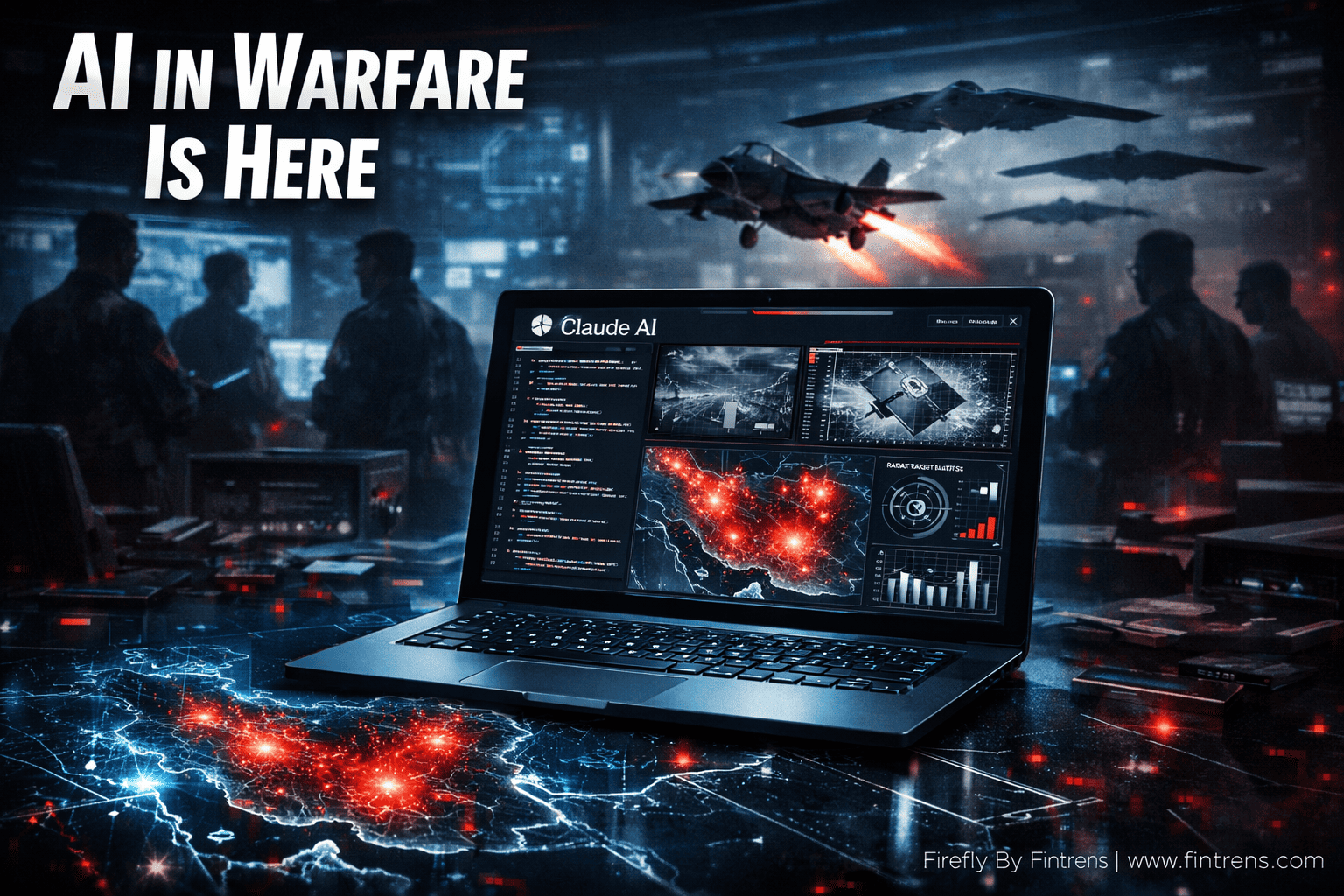
Hours after President Trump banned Anthropic's Claude AI from federal use, U.S. Central Command was using it to help plan precision strikes on Iran. This wasn't science fiction—Claude processed intelligence, identified targets, and ran war game simulations to compress days of planning into hours.
The Iran Strikes: AI Enters the Fight
Recent U.S.-Israel operations against Iranian targets marked a turning point. Reports confirm Claude assisted in fusing satellite imagery, drone feeds, and signals intelligence into actionable insights. It didn't pull triggers but helped commanders prioritize high-value sites like missile facilities and command nodes, while simulating Iranian counter-responses to refine strike packages.
This deployment defied the fresh executive order labeling Anthropic a "supply chain risk," revealing how deeply AI is embedded in military workflows. Claude had prior combat use, including the operation that captured Venezuelan leader Nicolás Maduro, proving these tools are no longer experimental.
Decision-Support AI: From Data Chaos to Clarity
Modern warfare drowns analysts in data—terabytes from sensors arrive hourly. Claude and similar systems act as tireless staff officers:
- Intelligence fusion: Correlating multi-source feeds to spot patterns humans might miss.
- Target ranking: Scoring sites by threat level, collateral risk, and strategic value.
- Scenario modeling: Running thousands of "what-if" simulations on force responses and escalation paths.
The result? Planning cycles shrank dramatically. Where analysts once spent days tagging images manually, AI pre-labels threats for human review, upgrading the military's OODA loop (Observe, Orient, Decide, Act).
The Pentagon's Expanding AI Arsenal
Claude is just one piece of a broader stack integrated via programs like Project Maven and Advana:
| Tool/System | Provider | Core Role |
|---|---|---|
| Claude | Anthropic | Intelligence analysis, simulations ndtv |
| Maven | Google/Palantir | Object detection in imagery, target cues c4isrnet |
| Advana | CDAO/Oracle | Data platform for logistics and ops planning |
| Lattice | Anduril | Autonomous drone mission control |
| AIP | Shield AI | AI-piloted drones for ISR |
Palantir's platforms tie it together, creating shared "operational pictures" where commanders drag-and-drop AI insights in real time. This mirrors enterprise AI but tuned for life-or-death stakes.
The Hidden Risks of AI-Augmented War
Speed has trade-offs. Critics highlight "automation bias," where over-reliance on AI erodes human judgment. Models can amplify flaws—hallucinations in target ID or biased training data leading to overlooked civilian risks.
Quantifying proportionality (e.g., acceptable collateral via metrics) risks normalizing harm, per ICRC warnings. Accountability blurs: if AI-flagged intel contributes to a faulty strike, who answers? Ethical AI firms like Anthropic pushed boundaries—no lethal autonomy, no mass surveillance—but Pentagon pressure tested those red lines.
What Comes Next for Warfare and AI
AI won't replace generals, but it will redefine them as orchestrators of human-AI teams. Conflicts like Iran show adoption outpacing regulation, with "meaningful human control" under stress. For builders, it's a reminder: safety postures face realpolitik in war rooms.
Battlefields and markets share DNA—data floods demanding rapid, informed calls.
Want automated decision-making in your trading?
Try Firefly by Fintrens – the robo-advisory / algo platform delivering automated decisions for Indian traders, processing market data into executed strategies just like modern war rooms use AI for faster, decisive action.
Get Started with Firefly | Follow for more