
The Art of Waiting: Why Timing Is the Ultimate Competitive Advantage
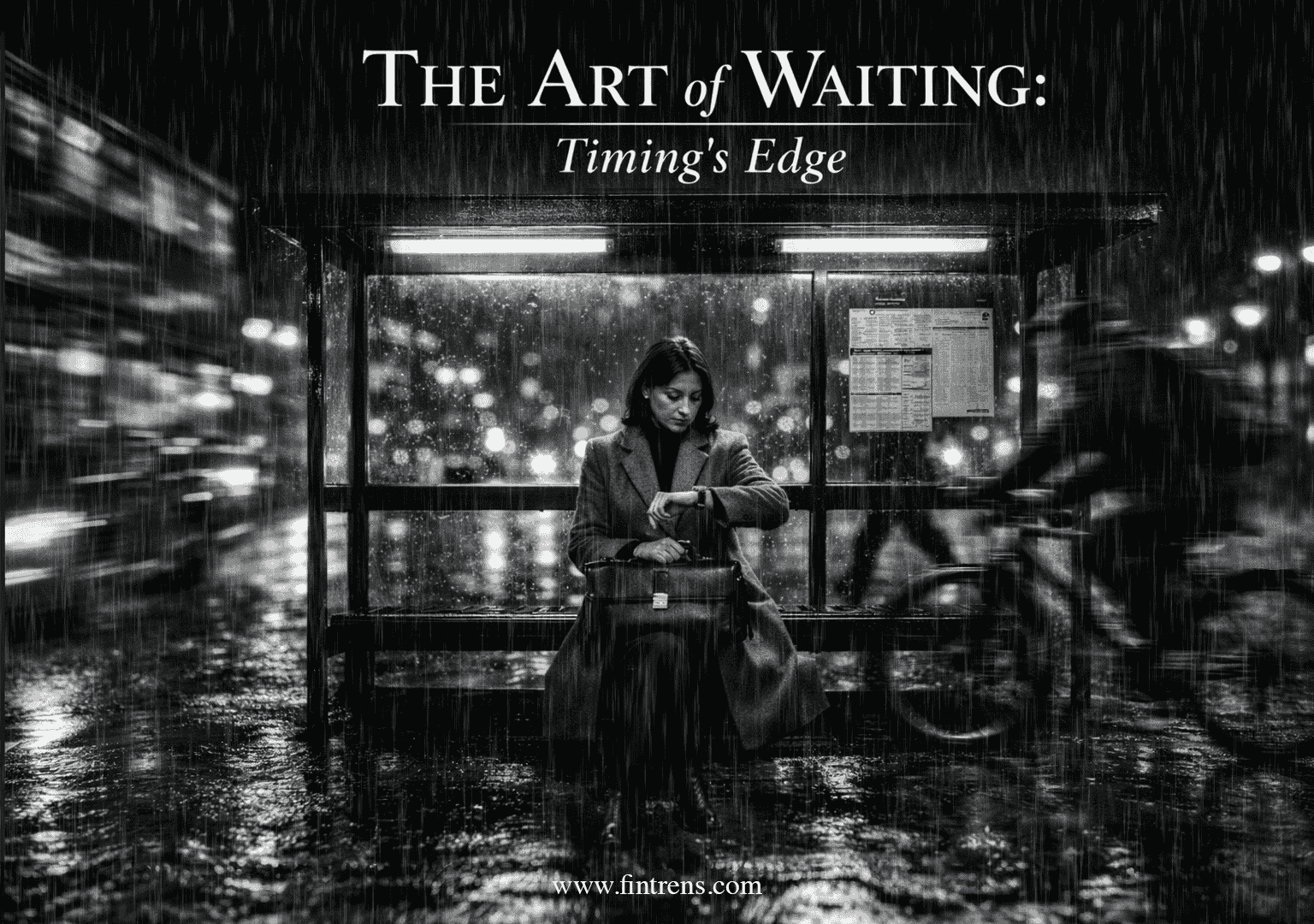
In a world that celebrates the "hustle," we have been conditioned to believe that speed is the ultimate metric of success. We are told to move fast, break things, and act now. We treat a "bias toward action" as a golden rule, fearing that even a moment of hesitation will result in a missed opportunity.
But if you look closely at the most successful systems—whether in nature, engineering, or high-stakes decision-making—you will find that they are not characterized by constant movement. Instead, they are defined by a quiet, calculated readiness. This is the Art of Waiting.
Waiting is not the absence of action; it is the preparation for it. It is the understanding that acting too early ruins the outcome, while acting too late misses the chance. True power is found in the "Goldilocks Zone"—the exact moment when the conditions are perfect for a simple action to become incredibly powerful.
The Cost of Moving Too Fast
Most of our mistakes in life don't happen because we lack the skill to act, but because we lack the discipline to stay still.
Consider the chemistry of brewing tea. There is a precise window of time where the water temperature and the leaves interact to create the perfect flavor profile. If you are impatient and pull the tea too early, you have weak, flavorless water. If you forget it and leave it too long, the tannins turn the brew bitter and undrinkable. The ingredients were the same, but the outcome was dictated entirely by the clock.
This principle extends to almost every human endeavor:
- In Conversation: Speaking too early, before you have all the facts, leads to misunderstandings.
- In Sports: A striker in soccer who runs too early is caught offside; a fraction of a second makes the difference between a goal and a penalty.
- In Business: Launching a product before the market is ready—or before the product is polished—is the most common cause of startup failure.
When we rush, we are usually reacting to noise rather than signals. Noise is the temporary fluctuation of the world around us. It is the frantic energy that makes us feel like we must "do something." Signals, however, are the true indicators of change. To find the signal, you must be willing to wait for the dust to settle.
The Psychological Burden of Patience
Waiting is physically and mentally taxing because it contradicts our survival instincts. Thousands of years ago, a quick reaction to a rustle in the bushes meant the difference between life and death. Our brains are hardwired to prefer an immediate, imperfect reaction over a delayed, perfect one.
This is why "doing nothing" feels so much like "losing."
However, in the modern world, the most complex problems are not solved with adrenaline; they are solved with logic. The challenge is that human emotion—fear, greed, and boredom—constantly interferes with our ability to remain patient. We get bored when things are quiet, so we invent reasons to act. We get scared when things are volatile, so we act out of panic.
The Art of Waiting requires a shift in mindset. We must stop viewing waiting as "wasted time" and start viewing it as "strategic observation."
Logic Over Instinct: The Superiority of Structure
In environments where the stakes are high and the data is dense, human instinct often becomes a liability. Instinct is great for dodging a ball, but it is terrible for navigating a global economy or a complex technical system.
Why? Because instinct is biased. It is influenced by what we ate for breakfast, how much sleep we got, and the last "bad news" we read on our phones.
Structured logic, on the other hand, does not get tired. It does not get bored. It does not feel the "itch" to act just to feel busy. A logic-based approach allows for a level of patience that a human mind can rarely sustain on its own. It allows for a process that looks like this:
- Observation: Constantly scanning the environment without the need to interfere.
- Filtering: Distinguishing between meaningless noise and actionable signals.
- Thresholds: Setting "predefined conditions" that must be met before a single move is made.
- Execution: Acting with 100% conviction only when the math lines up.
When you follow a structure, you are no longer a slave to the "now." You become a master of the "when."
Reclaiming the Power of the Pause
If you can master the Art of Waiting, you gain a massive advantage over the rest of the world that is busy rushing into mistakes. By waiting, you conserve your energy, your capital, and your focus. You ensure that when you finally do strike, you are doing so with the full weight of the evidence behind you.
This is the philosophy of the "Smartest Action." Sometimes, the most intelligent thing you can do is keep your hands in your pockets. You observe. You wait for the tea to brew. You wait for the traffic light to turn. You wait for the market to reveal its true direction.
The Firefly Philosophy
This disciplined approach to timing is at the very core of how Firefly operates.
In the world of trading, where emotions usually lead to ruin, Firefly applies the Art of Waiting with mechanical precision. It does not trade out of boredom, and it does not chase the "noise" of the market. Instead, it follows a philosophy of structured logic—staying patient and acting only when its predefined conditions are perfectly met.
By removing human impatience from the equation, Firefly demonstrates that in the long run, patience isn't just a virtue—it’s the smartest strategy.
Continue the journey with Fintrens
If the idea of patience + structure resonates—and you want to see how “waiting for the right moment” turns into real systems and real execution—explore these:
- Visit Fintrens (the bigger philosophy): https://www.fintrens.com
- Explore Firefly Docs (the rules + structure behind execution): https://docs.firefly.fintrens.com
- Follow live updates (signals in real time): https://whatsapp.com/channel/0029VackYjRLdQegrpD4uj2T
- Join the community (learn, track, grow together): https://www.fintrens.com/join
Disclaimer: This post is for educational and informational purposes only and reflects a general philosophy on decision-making and timing. It is not financial advice, investment advice, or a recommendation to buy/sell any security. Markets involve risk, and past performance is not indicative of future results. Please do your own research and/or consult a qualified financial advisor before making investment decisions.