
Union Budget 2026: What Stock Market Investors in India Must Know
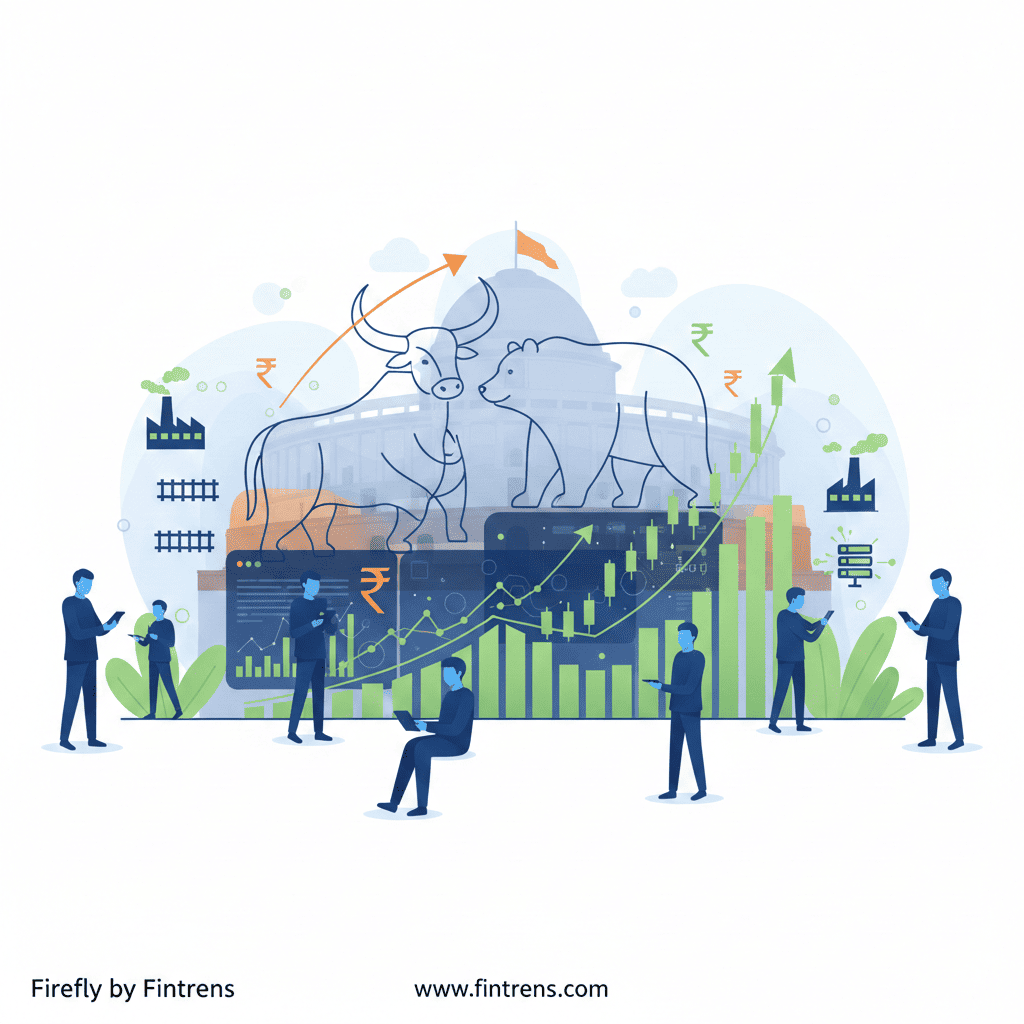
Finance Minister Nirmala Sitharaman’s Union Budget 2026–27 has introduced several important changes that directly impact Indian stock market investors. While infrastructure spending, manufacturing incentives, and digital growth remain key focus areas, the Budget sends a much stronger message beneath the surface — India wants to move investors away from speculation and towards long-term wealth creation.
If you invest in equities, derivatives, mutual funds, or algorithmic strategies, here’s a simple breakdown of what Budget 2026 really means for you.
The Big Picture: India Moves Towards Sustainable Investing
India’s capital markets are at a turning point.
- Over 21 crore demat accounts
- Record SIP inflows of ₹31,000+ crore per month in 2025
- Rapid rise in retail participation in derivatives (F&O)
Budget 2026 reflects this evolution. The government is clearly signalling that short-term speculative trading is risky for retail investors, and policies will increasingly favour disciplined, long-term investing.
This is not just about taxation — it’s about shaping investor behaviour.
1. Securities Transaction Tax (STT) Hike: Trading Just Got Costlier
What Has Changed?
The Budget proposes a sharp increase in STT on derivatives:
- STT on Futures: Increased from 0.02% to 0.05% (150% jump)
- STT on Options Premium: Increased from 0.10% to 0.15%
- STT on Options Exercise: Increased from 0.125% to 0.15%
What This Means for Investors
Higher STT directly reduces profitability for:
- Intraday traders
- High-frequency traders
- Arbitrage and option-selling strategies
This move is clearly aimed at reducing excessive speculation in F&O, where data shows that most retail traders consistently lose money.
Market experts believe F&O volumes may fall in the near term — painful for traders, but healthier for the market overall.
Why the Government Did This
STT collections stayed flat at around ₹45,000 crore in recent years, far below the ₹78,000 crore target. Despite this, the government chose stability over revenue, reinforcing its focus on long-term market health.
2. Share Buyback Tax Changes: Big Relief for Individual Investors
Earlier System (2024 Budget)
- Buyback proceeds taxed as dividend income
- Taxed at slab rates (up to 30% for high-income individuals)
- Led to uneven outcomes and tax arbitrage by promoters
New Buyback Tax Rules (Budget 2026)
Buybacks are now taxed as capital gains.
For Individual Investors:
- Short-Term Capital Gains (STCG): 20%
- Long-Term Capital Gains (LTCG): 12.5%
- Tax savings up to 50% compared to earlier slab rates
For Promoters:
- Corporate promoters: 22%
- Non-corporate promoters: 30%
This discourages misuse of buybacks while rewarding genuine retail shareholders.
Additional Points to Remember
- TDS for resident individuals: 10% (if proceeds exceed ₹5,000)
- TDS for non-residents: 20% (subject to DTAA)
- Capital losses from buybacks can be carried forward for 8 years
3. NRI Investment Limits Increased: More Stable Capital Coming In
What Changed?
The Portfolio Investment Scheme (PIS) limits for overseas Indians (NRIs/PROIs) have been relaxed:
- Individual limit: Increased from 5% to 10%
- Overall cap: Increased from 10% to 24%
Why This Is Important
This reform can:
- Attract ₹5,000+ crore of long-term NRI capital
- Improve market liquidity
- Reduce dependence on volatile FII flows
- Help stabilise the rupee and equity markets
NRIs tend to invest with a long-term India growth perspective, which suits the government’s strategy.
4. Loan Interest Deduction Removed: Leverage Gets Discouraged
What’s New?
Interest paid on loans taken to invest in stocks or mutual funds will no longer be deductible against investment income.
Earlier, investors could deduct interest up to 20% of investment income.
Impact on Investors
- Margin trading becomes less tax-efficient
- Borrow-to-invest strategies lose their advantage
- Encourages investors to invest within their risk capacity
This aligns with SEBI and RBI’s concerns about excessive leverage in retail investing.
Market Reaction: Why Sensex and Nifty Fell Sharply
On Budget day:
- Sensex: Fell 1,546 points to 80,722
- Nifty 50: Fell 495 points to 24,825
- Mid & Small Caps: Down 2–3%
What Spooked the Market?
- Surprise STT hike
- No relief on capital gains tax
- Selling pressure in brokerage and derivatives-heavy stocks
The reaction was short-term sentiment driven, not structural.
How Should Investors Position After Budget 2026?
1. Focus on Quality, Not Frequency
Avoid over-trading. Long-term investing beats frequent speculation, especially after higher transaction costs.
2. Stay Defensive but Invested
Remain diversified and avoid panic selling. Volatility creates opportunities for patient investors.
3. Sectors to Watch
Budget-aligned sectors with long-term tailwinds include:
- Railways
- Electronics & Semiconductors
- Pharma
- Metals & Mining
- Data Centres
What This Means for Firefly Users & Algo Investors
Higher STT impacts high-frequency trading strategies, but momentum-based and medium-term algorithms remain viable.
For SIP-driven, systematic, and robo-advisory portfolios, Budget 2026 is actually positive. The move away from speculation strengthens disciplined investing models.
Final Takeaway: Budget 2026 Changes How India Invests
The message from Budget 2026 is loud and clear:
✔ Discourage Speculation
Higher STT and removal of loan interest deductions make short-term trading less attractive.
✔ Promote Long-Term Wealth Creation
SIPs, favourable buyback taxation for individuals, and higher NRI participation support sustainable growth.
For retail investors, easy F&O profits are fading. But for those focused on long-term investing, quality stocks, and disciplined strategies, the environment has never been stronger.
Short-term volatility will settle. The policy direction will not.
Disclaimer:
This article is for informational purposes only and does not constitute investment advice. Please consult a qualified financial advisor before making any investment decisions. Past performance is not indicative of future results.